Liburnia
An Alternate Dalmatian Coast
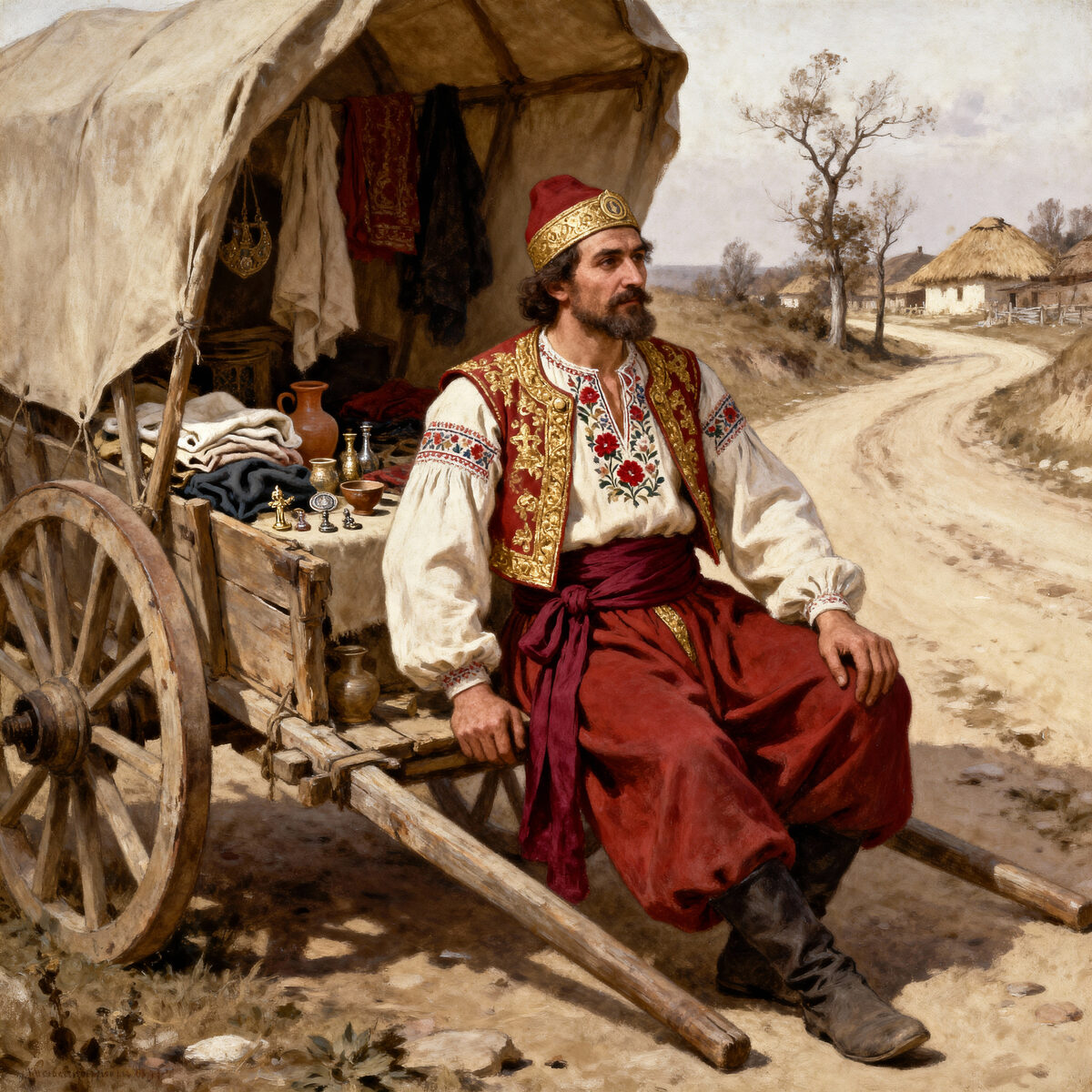
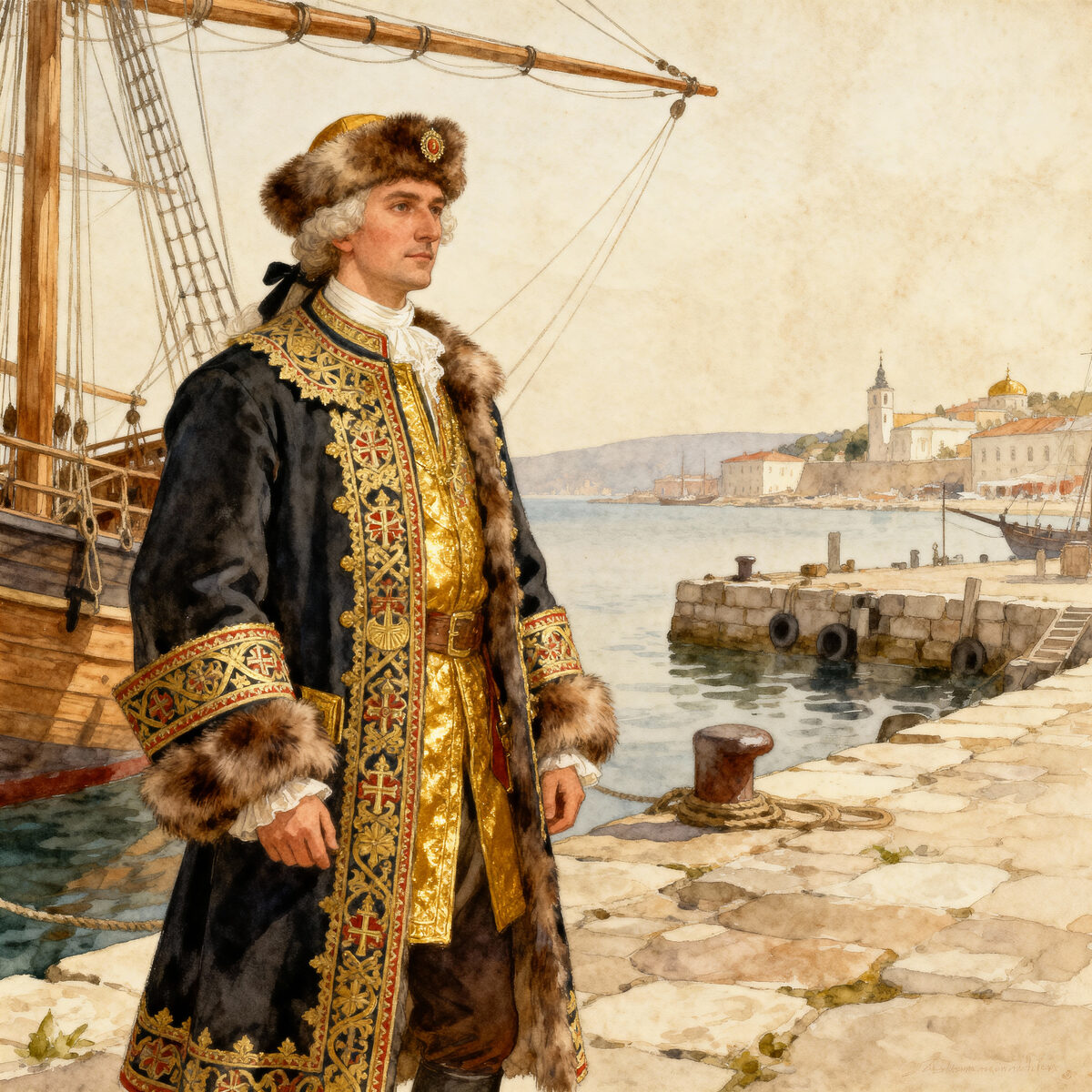
White stone cities on rocky coastlines where the cliffs drop straight into blue water and the harbors are full of somebody else’s ships. Dark-eyed and expressive, the kind of faces that cannot hide what they are thinking and do not particularly try. Deep blues and reds with knotted embroidery, and the Roma who share the port districts dress brighter still. Violin and gusle and tambour fill the evening air from the harbor tavernas, the wedding dances go on for days, the funeral laments could break stone, and the line between the two has always been thinner here than anywhere else on the coast.
The stone is white enough to blind you by midday and sharp enough to ruin a pair of Valdaran boots in a week. This is the Karst — a landscape made of holes, sinkholes that swallow the rain, caves that breathe cold air in August, mountains that look like they were poured out of a giant’s bag of broken marble. The Valdaran engineers want to build a coastal railroad but the limestone keeps disappearing under their tracks. They call it unstable geology. The Liburnians call it a sieve, and they know that the water they drink today was under the mountain yesterday and will be in the salt-spray tomorrow.
The Socii roads finally ran out of land here. For centuries your people have navigated the hard cold interior of the Haemus and the blue-glass trading world of the Mesogeios with equal fluency — mountain pass and lateen-rigged boat, the same hands, the same week. The old boyar manor houses still overlook harbors filled with foreign vessels, their icons watching over empty counting rooms where families gather only when creditors demand payment. The Valdaran administrator sees a picturesque coastline for merchant stops. The Liburnian sees a fortress of white stone where the terrain has always been more interested in making things difficult than in being administered.
The Bura arrives without announcement — a cold wind that comes from the mountains and crosses the coast at speeds that the Valdaran meteorologist records carefully in his notebook under atmospheric anomaly. The Liburnian lashes down the boat and waits. The mountain is exhaling, and you do not argue with a mountain’s breath. You wait for the air to finish being clean, and then you go back to work, understanding that the Bura happens when the mountain has had enough of whatever was on the coast that week.
The folk practice here is vertical. On the coast, the vrulja — the places where the mountain’s freshwater erupts through the floor of the salt sea — are proof that the landscape operates by rules that have nothing to do with the Valdaran survey map. The saint in the seaside chapel is asked for protection, and the mountain is asked for permission; two different requests to two different authorities, and the Liburnian who confuses them is the Liburnian who loses a boat. In the interior, the stone threshing circles, the guvno, are where the village assembles, the circle-dances happen, and the arrangements are maintained by people who can see the Faith’s church from where they are standing and find no contradiction in this.
The caves go down further than the Valdaran surveys acknowledge. There are systems under the karst that connect things the surface map treats as unconnected: this spring and that one, this valley and the next, this family’s water and their neighbor’s. The vila know these connections — wild presences of the mountains and the high lakes who have been territorial about the karst long enough that they will still be territorial about it after the railroad is finished and forgotten. They care about correct conduct from the people moving through their territory — a bowl of honey left where the cave breathes, a silver coin at the spring that runs cold in August — and the Liburnian who grew up near the mountain knows what correct conduct looks like without being taught.
The Dunraven Folk’s Drekarmen already move between the same kinds of thresholds, treating the boundary between one world and the next as a practical matter, which is exactly how a people raised on the karst have always treated it. The Kraken’s Bounty will value your navigation skills at considerably more than the Valdaran harbour-master ever did, but a Liburnian who grew up reading the current that disappears under the mountain should recognize a hidden undertow when they see one.
Reference Images
These images represent the visual direction for this region and were generated with OpenArt.
Grimmloch is an alternate reality — not a retelling of history. I have spent decades studying the stories of our own world so that each region feels grounded in something real, even when the fiction diverges. The map is not the territory. If I have, at any point, failed to honor the spirit of these cultures, please email me directly. I welcome the opportunity to address it.