Skania
An Alternate Scandinavia
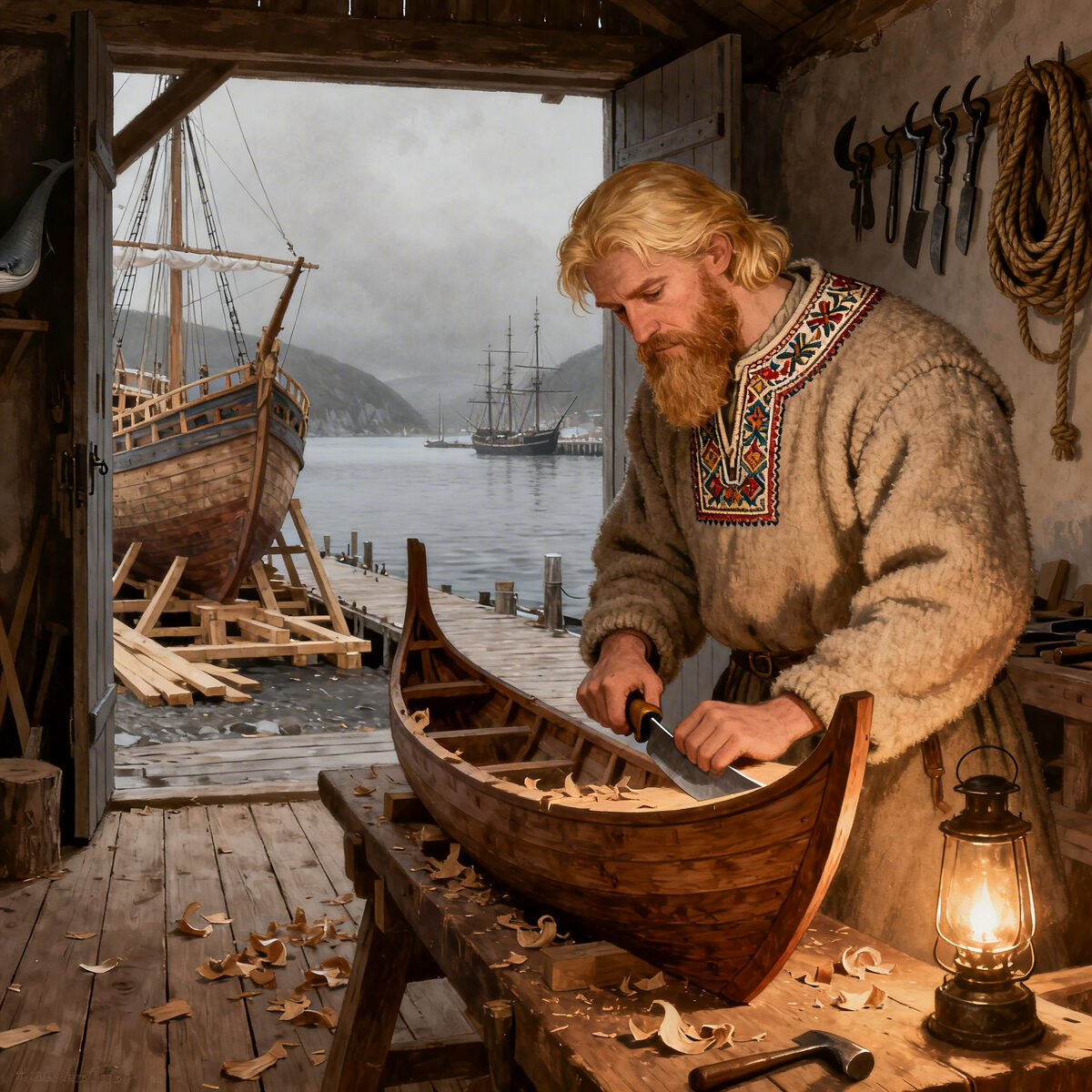
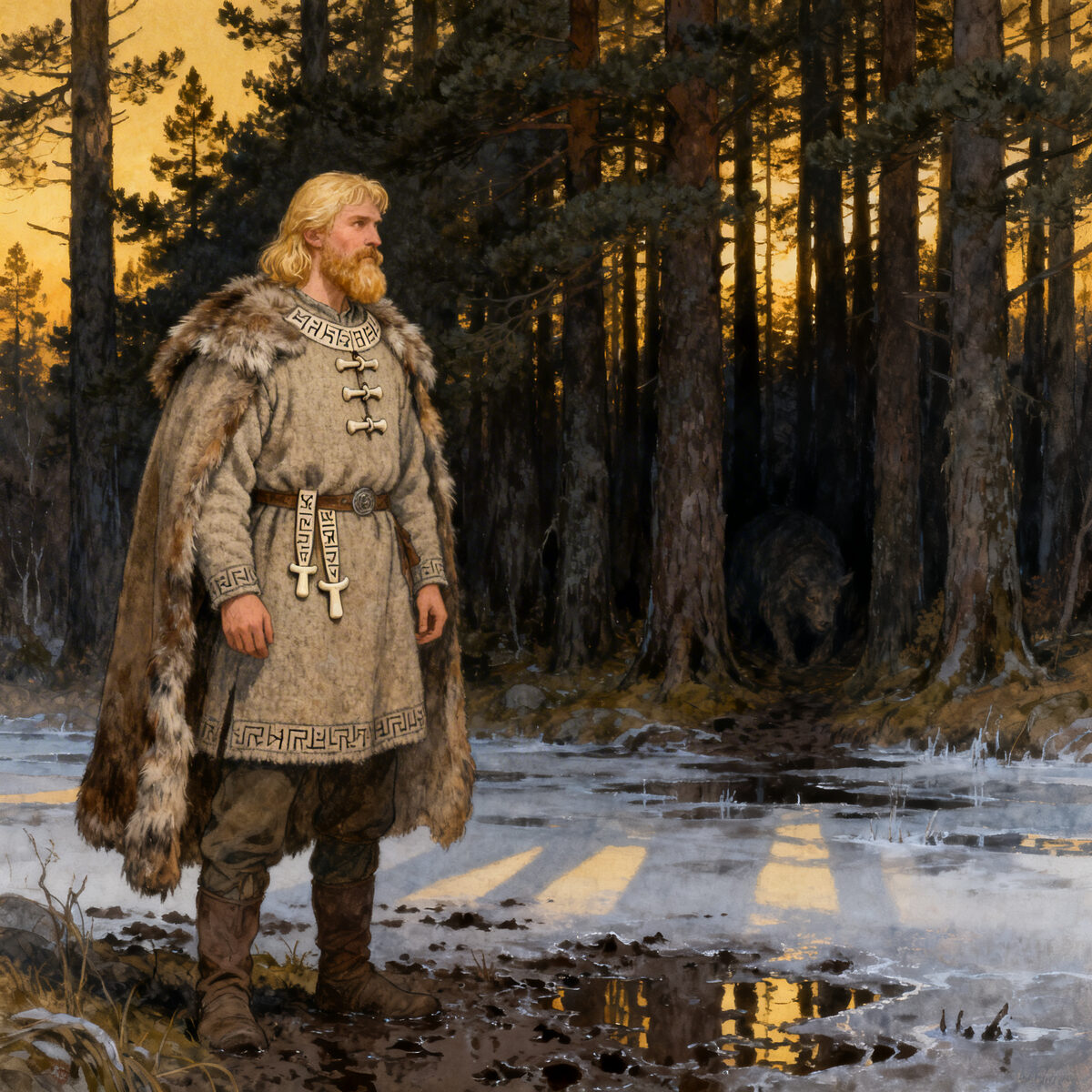
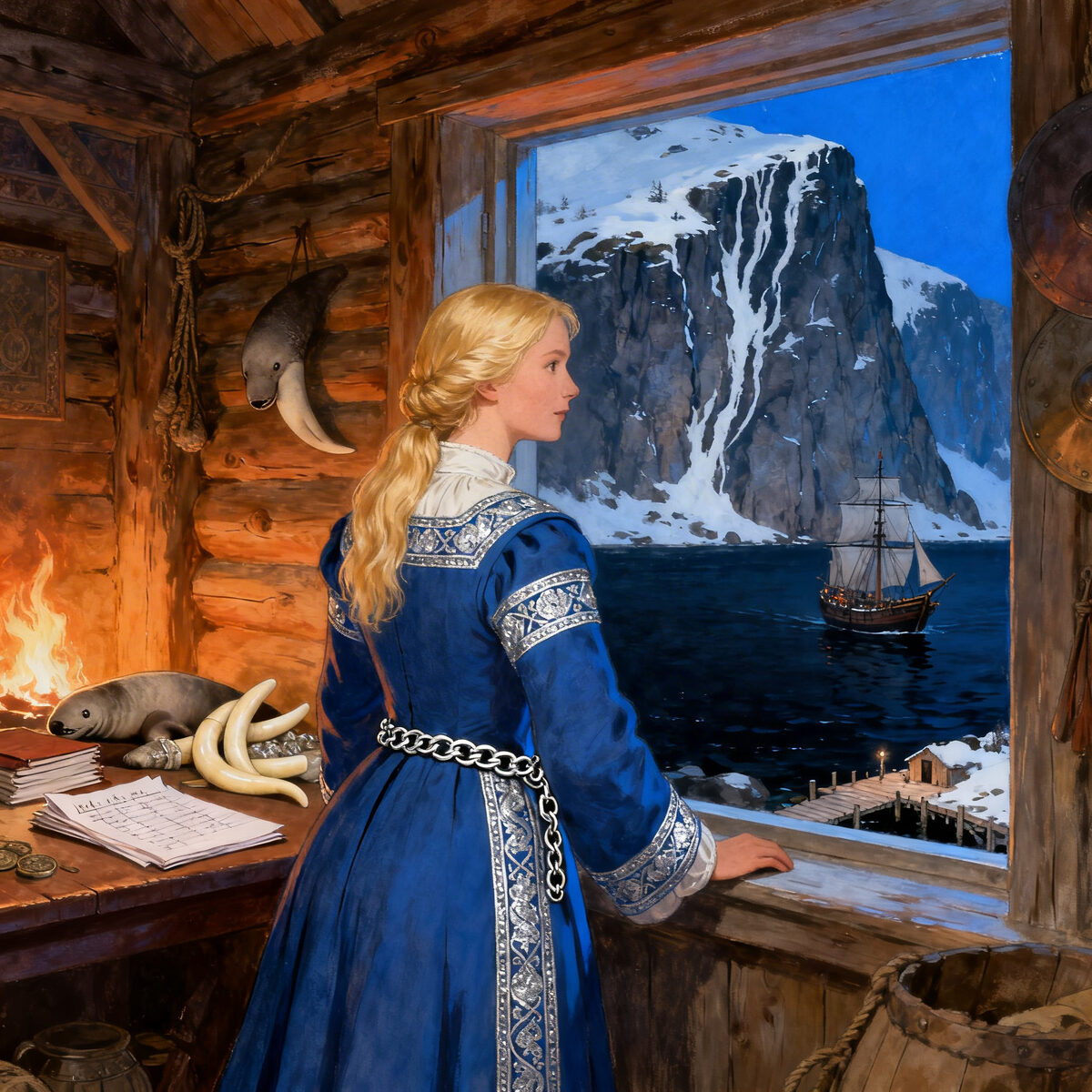
Skania is winter country, where the cold lasts half the year and the summer sun barely sets. Fjords reach inland from the coast, mountain passes link the valleys, and the country sits north of Neustria and west of Wendland. The Skanne who live there carry one language at home: Norse. Their longships crewed as Væringjar guards in Tsarigrad four centuries ago and traded walrus ivory along the Mesogeios. Today the longships sit beached and patched, the iron forges turn out nails for Karlingrad construction, and the Faith’s stave churches stand in the valleys below the ridges where the burial mounds have always sat.
Pine smoke from the timber halls, lichen on the boundary stones, stockfish drying on the racks above the sea-doors. Fair-haired and broad-shouldered, dressed in undyed wool and patched furs and the festival shirts the women embroider with Futhark patterns in madder and birch-bark thread. The skald tells the saga after the meal, the fiddle plays at the wedding feast, the smith’s hammer rings before dawn. Mjöd shared from the common horn, dark bread and salted fish on the long table, and the hearth fire someone always tends.
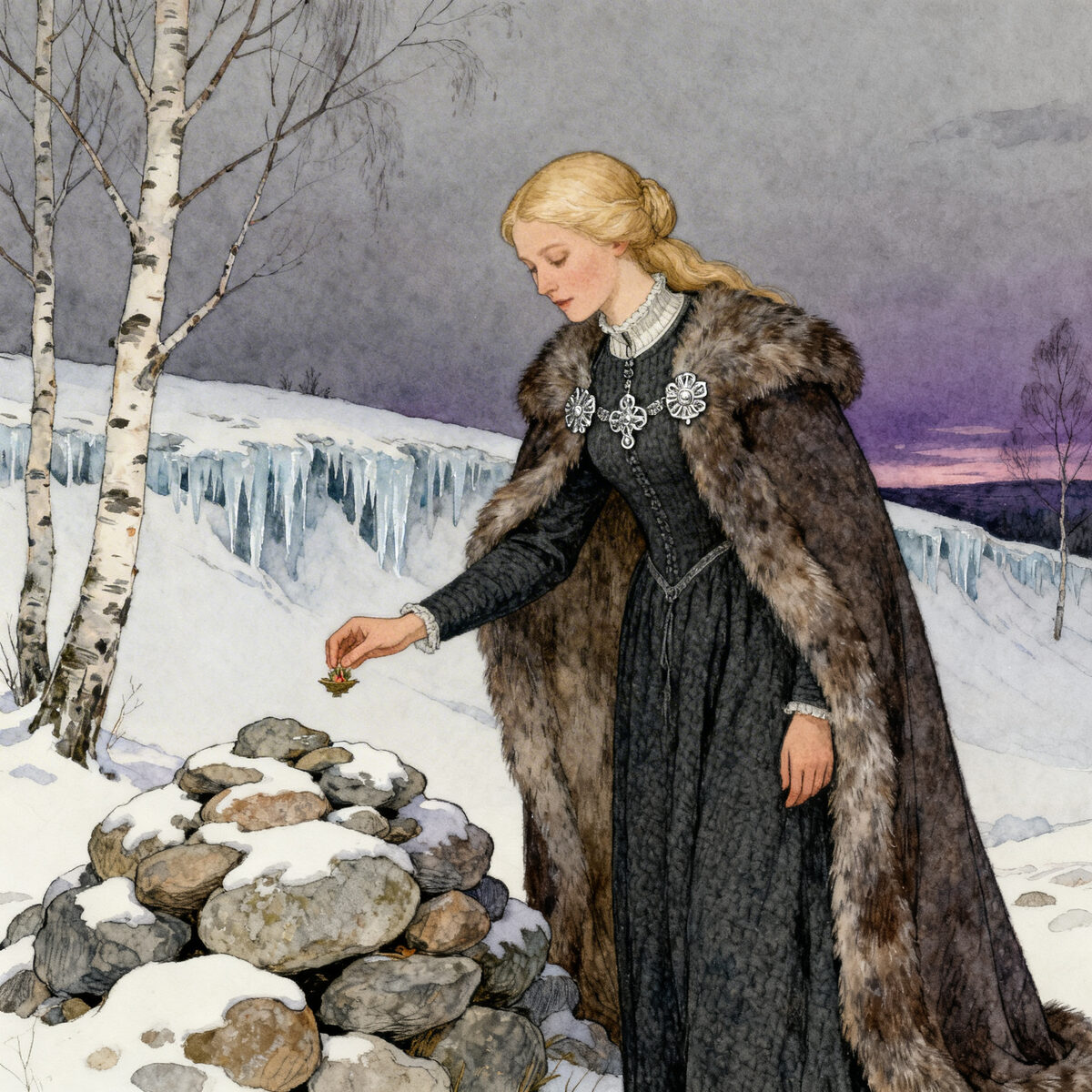
On Vetrnætr, the Winter Nights of late October, the head of the household leaves a blót at a chosen mound after dark. The blót is a bowl of ale and a slice of the harvest-beast’s heart. The choice of mound and hour stays inside the family. The Valdaran inspector who asks is told it is just an old custom.
Runestones on the coastal headlands name sons lost on the long voyages. The runes give the man’s name, his mother’s name, and the date by the season. Some stones have been re-cut where the wind has worn them, the new chisel-marks following the worn grooves of the original carver. The juniper sprigs at the base of the older stones are renewed by descendants generations removed from the man named on them.
At the end of every spring, the jarl walks down to the shore with the young men of the village. He stops at his grandfather’s longship and sits on the prow. The dragon-head has weathered to bone-color, and the planks are patched in a half-dozen places with whatever wood the village could spare. The men pause at the longship, each one touching the dragon-head and speaking the name of an ancestor who crewed her. Then they continue to the long pier and sign on with the merchant fleets, because they pay in coin, not glory.
In Grimmloch the Aelfyn Sith’s Horde holds the caves above the mountain passes, and a Skanne who has worked the high pass in winter knows the country. The Dunraven Folk’s Járnvarg speak Norse in their long hall, and the wyrd they carve into the lintels is the same kind the carvers cut into the runestones on the coastal headlands at home. The Kraken’s Bounty recruits at every harbor; the Captain-General asks whether you can read a current before he asks your name, and a Skanne who has crossed to the merchant pier already knows the answer.
Reference Images
These images represent the visual direction for this region and were generated with OpenArt.
Grimmloch is an alternate reality — not a retelling of history. I have spent decades studying the stories of our own world so that each region feels grounded in something real, even when the fiction diverges. The map is not the territory. If I have, at any point, failed to honor the spirit of these cultures, please email me directly. I welcome the opportunity to address it.